
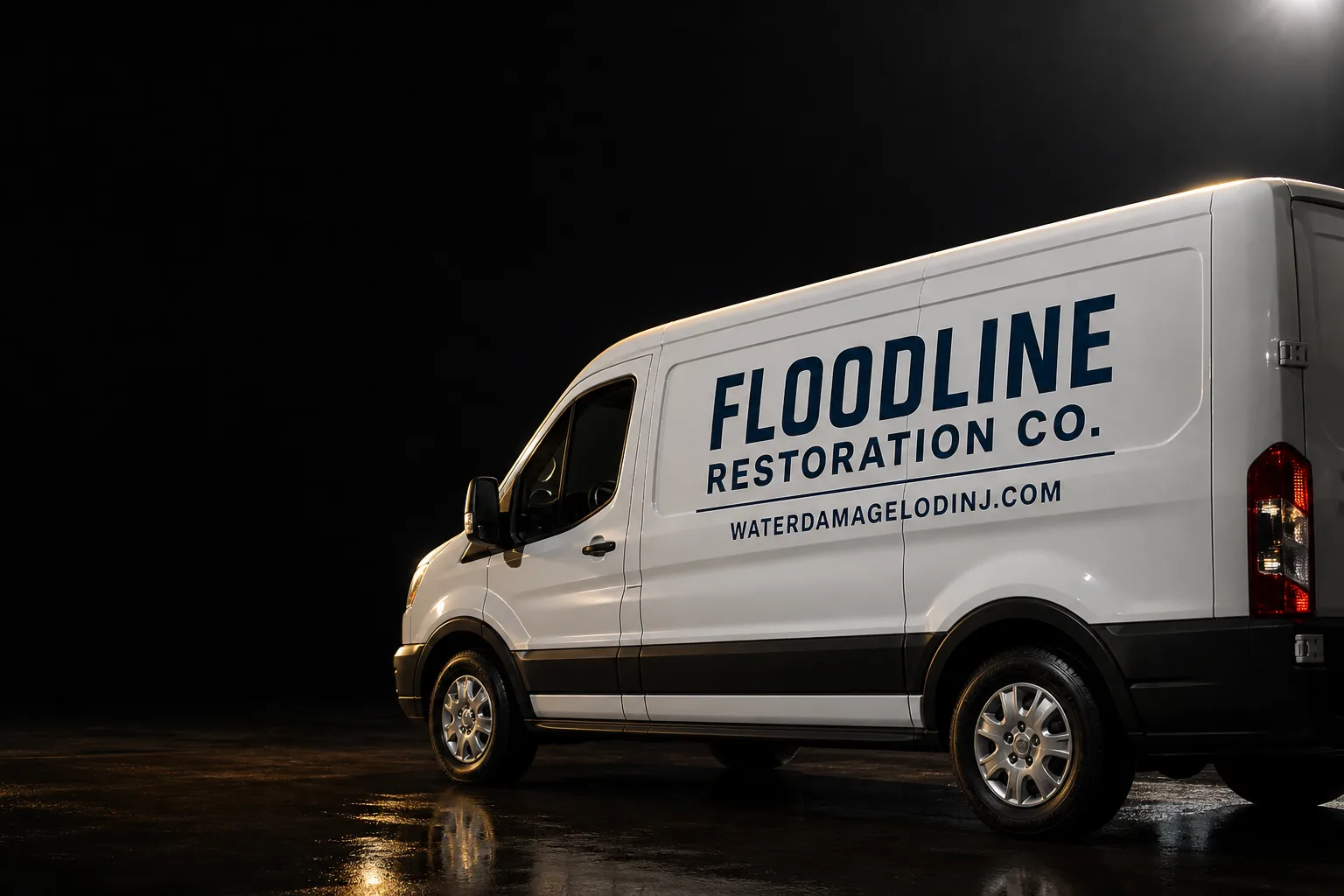
Free visual inspection and a written scope of work before any mitigation begins - photos, moisture readings, and drying logs go in your claim file
The scope we write is the scope we bill. Anything new gets shown to you, in writing, before we touch it.
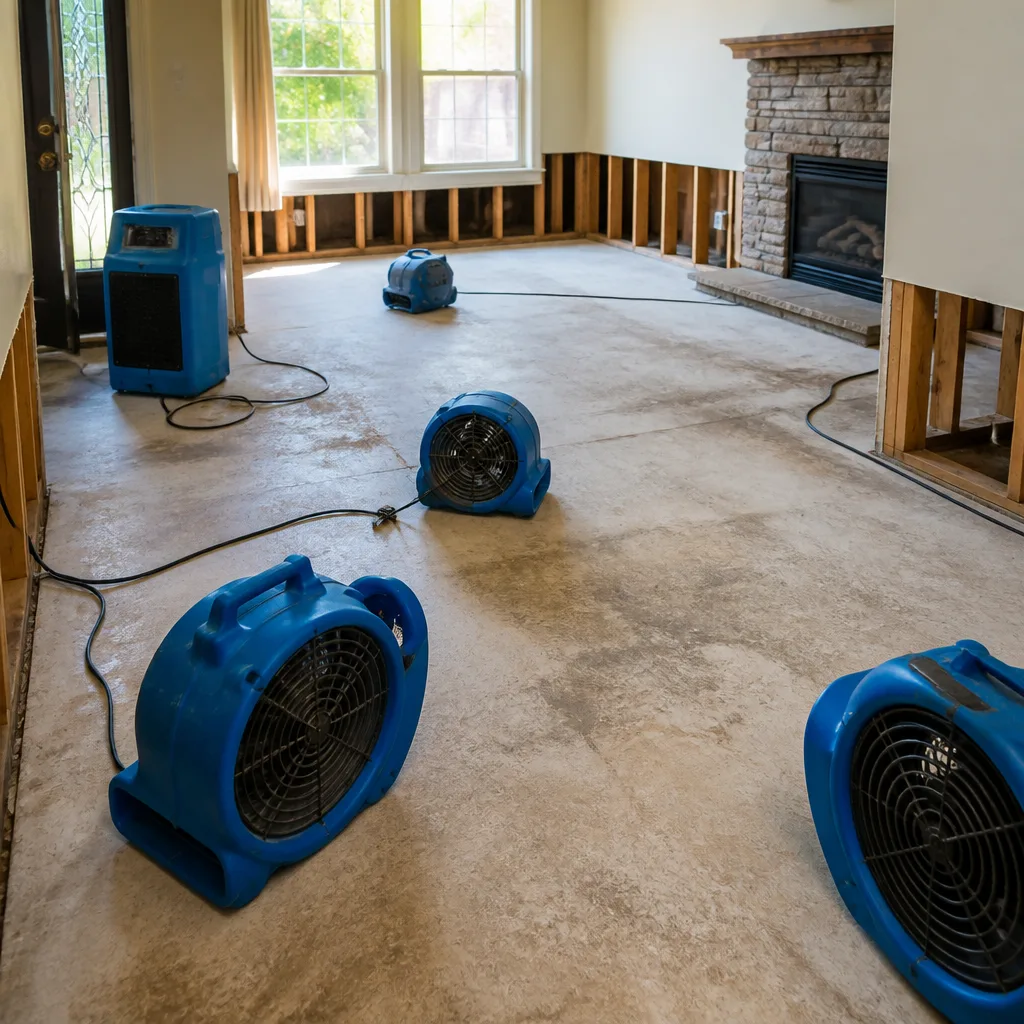





 Before
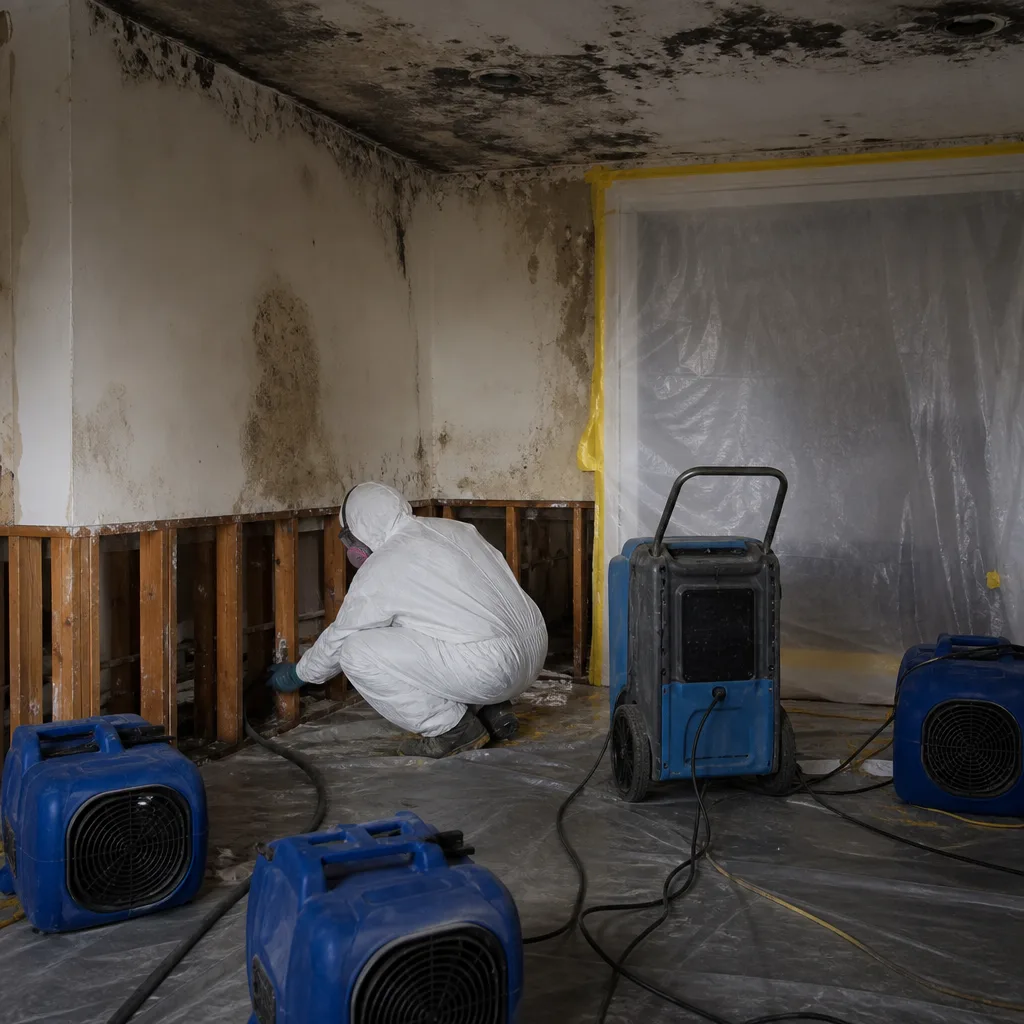
 After
After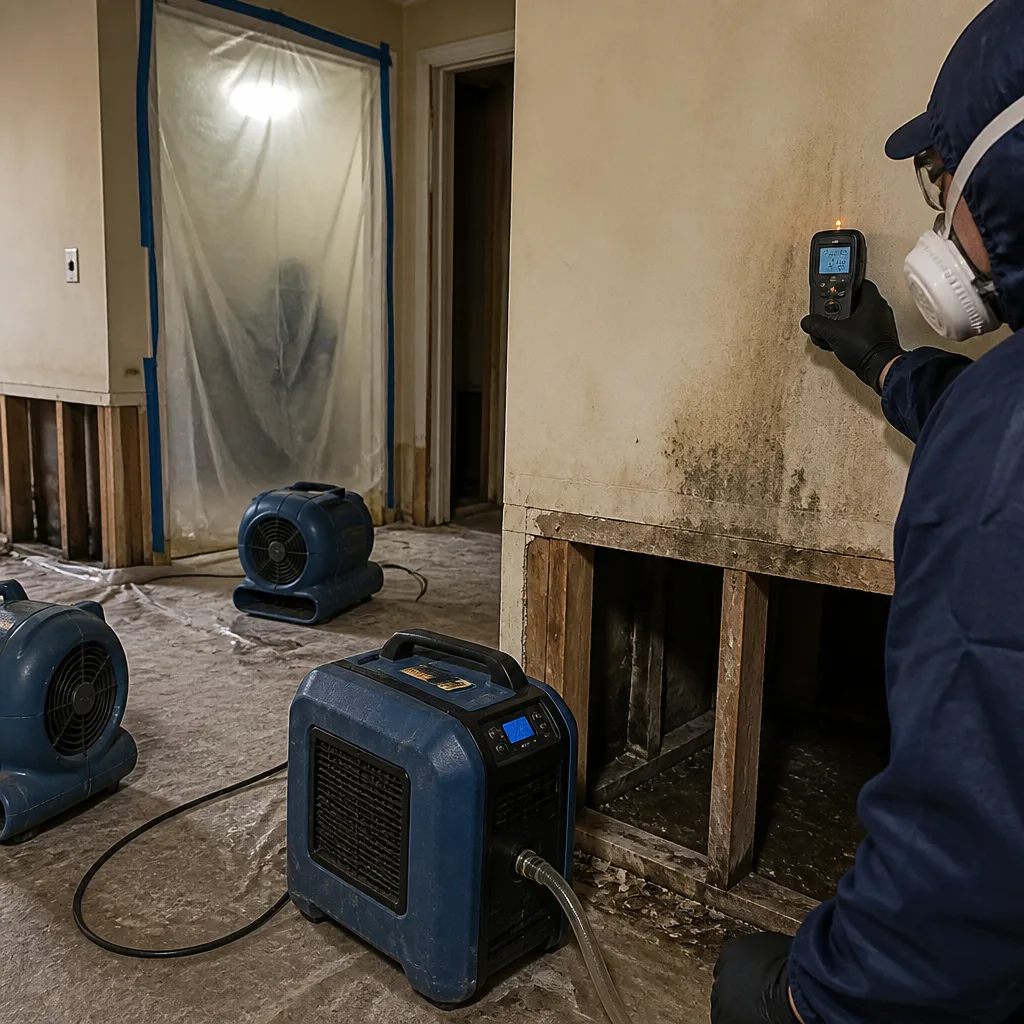 Before
 After
After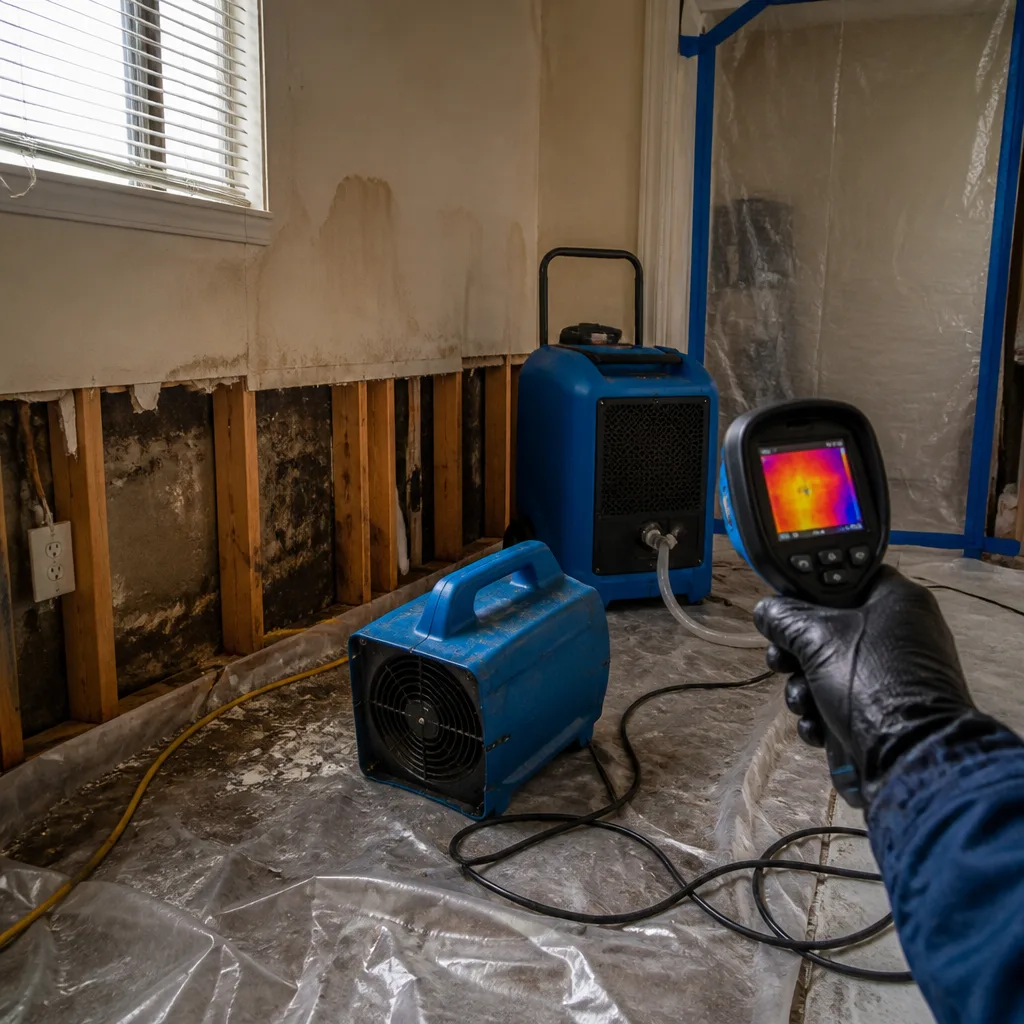 Before
 After
After24/7 Emergency Storm & Disaster Restoration in Tuckahoe
Storm damage in Tuckahoe moves fast, and so do we. When a nor’easter tears off shingles on Columbus Avenue or a spring storm backs the Bronx River into basements near Main Street, you call (640) 356-1140 and a live person picks up. Not a recording. Not an answering service. A dispatcher who knows Westchester County storm patterns and gets a certified crew rolling toward Tuckahoe immediately.
We run extraction and stabilization the same visit in most cases. That matters because every hour of standing water in a pre-war Tuckahoe basement is an hour of moisture wicking up into original plaster and old-growth framing. The first hour isn’t just important. It’s the difference between drying a basement and gutting one. Let our Storm & Disaster Restoration team arrive before the water does its deepest work.
Understanding Storm & Disaster Restoration Severity in Tuckahoe Properties
Storm damage in Tuckahoe rarely presents as a single, clean problem. It layers. You get a roof leak from wind-driven rain, which saturates an upstairs ceiling, which drips down into a 1920s plaster wall, which feeds water behind lath and into a basement with a foundation already weeping from the water table. One storm. Four separate moisture problems. That’s the reality for properties built before damp-proofing existed and before homes were designed to shed water the way modern construction does.
We classify water by category before touching it. Category 1 is clean water, usually from a burst supply line or roof leak. Category 2 carries contaminants, like sump overflow. Category 3 is grossly contaminated, and in Tuckahoe, that’s what Bronx River backup almost always is when it pushes up through floor drains and sump pits. We treat river water as biohazard until proven otherwise, because river water carries sewage, road runoff, and whatever the storm pulled upstream. On the repair side, moisture mapping in older construction is non-negotiable. A plaster wall can feel bone dry on the surface while a thermal imaging camera shows 34% moisture content behind the lath, and that hidden moisture is where mold starts within 48 hours.
Why Tuckahoe Property Owners Choose Floodline Restoration Co.
- Live dispatch, 24 hours a day. There’s no “leave a message and we’ll call you Monday.” A person answers at 2 a.m. and a storm crew moves toward Tuckahoe that same visit. This is not a sales desk. It’s a dispatch board, and it’s been run that way since 2010.
- Certified crews, real credentials. Our technicians carry IICRC WRT and FSRT certifications as standard, with AMRT for our mold and Category 3 specialists. They’re background-checked, uniformed, and trained to the standards the insurance industry itself recognizes.
- The 90-Day Done Right Promise. Every job comes with a written guarantee bred from our K.E.Y.S. value code: Krafted right, Every time, Your home first, Standing behind it. If the work isn’t done right, we make it right. No arguing. No forms.
- Free visual inspection. Before any work begins, we walk the property with you and document what we see. You get a clear picture of the damage and the path forward. No pressure, no obligation.
- Direct insurance billing. We document everything from the first hour, communicate directly with your adjuster, and bill the carrier directly. You don’t become a messenger between us and the insurance company.
- One crew, start to finish. The team that extracts the water is the team that dries the framing and rebuilds the wall. No mid-job handoff to a subcontractor you’ve never met and didn’t choose.
Our Storm & Disaster Restoration Process
Inspection & Assessment
We arrive, walk the property with you, and document every affected area. Thermal imaging cameras and moisture meters map where the water actually went, not just where it’s visible. In older Tuckahoe homes, that mapping matters more than in newer construction because hidden cavities are everywhere.
Extraction & Stabilization
We remove standing water with truck-mounted extraction units and stabilize the property. If there’s roof damage, we tarp it immediately. If there’s a structural concern, we shore it. The goal is to stop the damage from spreading while we build the full scope of work.
Drying & Dehumidification
We set Dri-Eaz and Phoenix dehumidifiers, XPOWER and B-Air air movers, and Injectidry systems for walls and hard-to-reach cavities. Daily moisture readings are logged until the dry standard is met, and that log goes to you and your carrier.
Cleaning & Sanitization
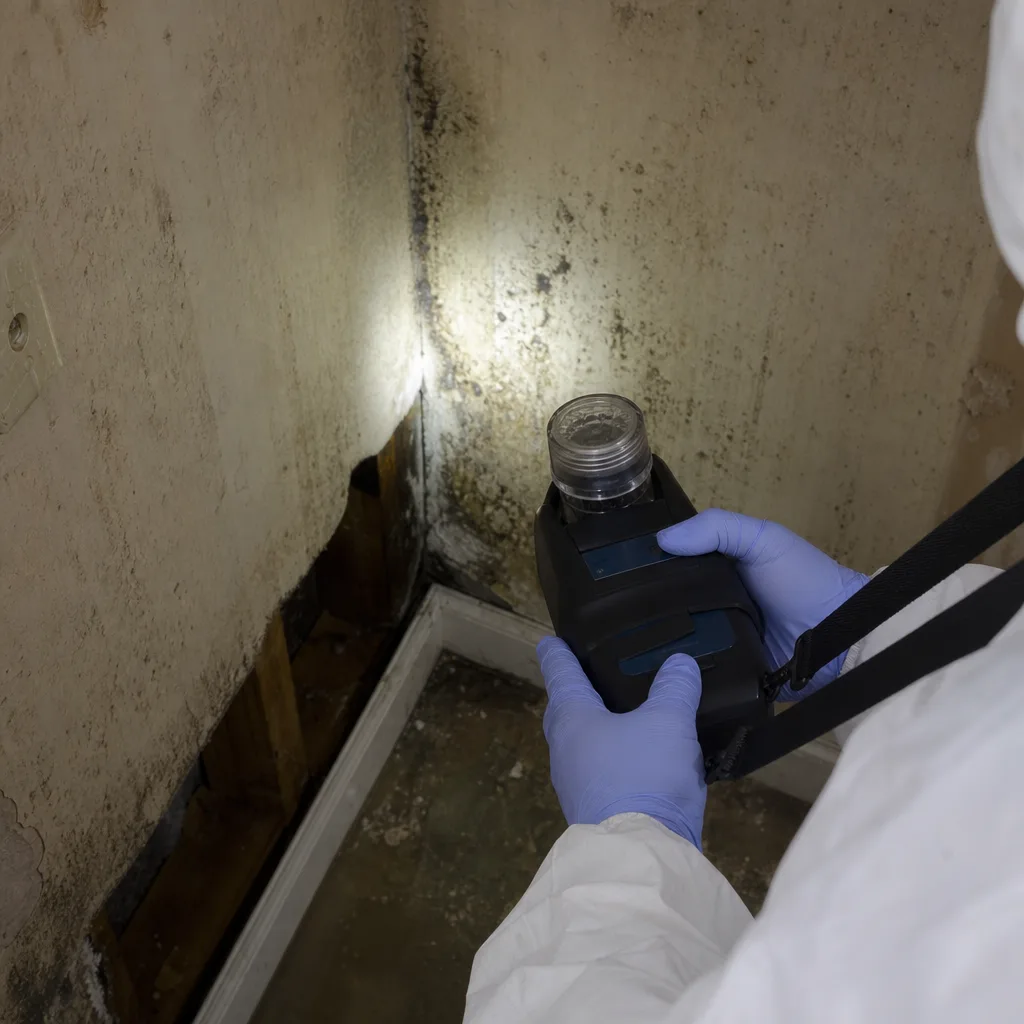
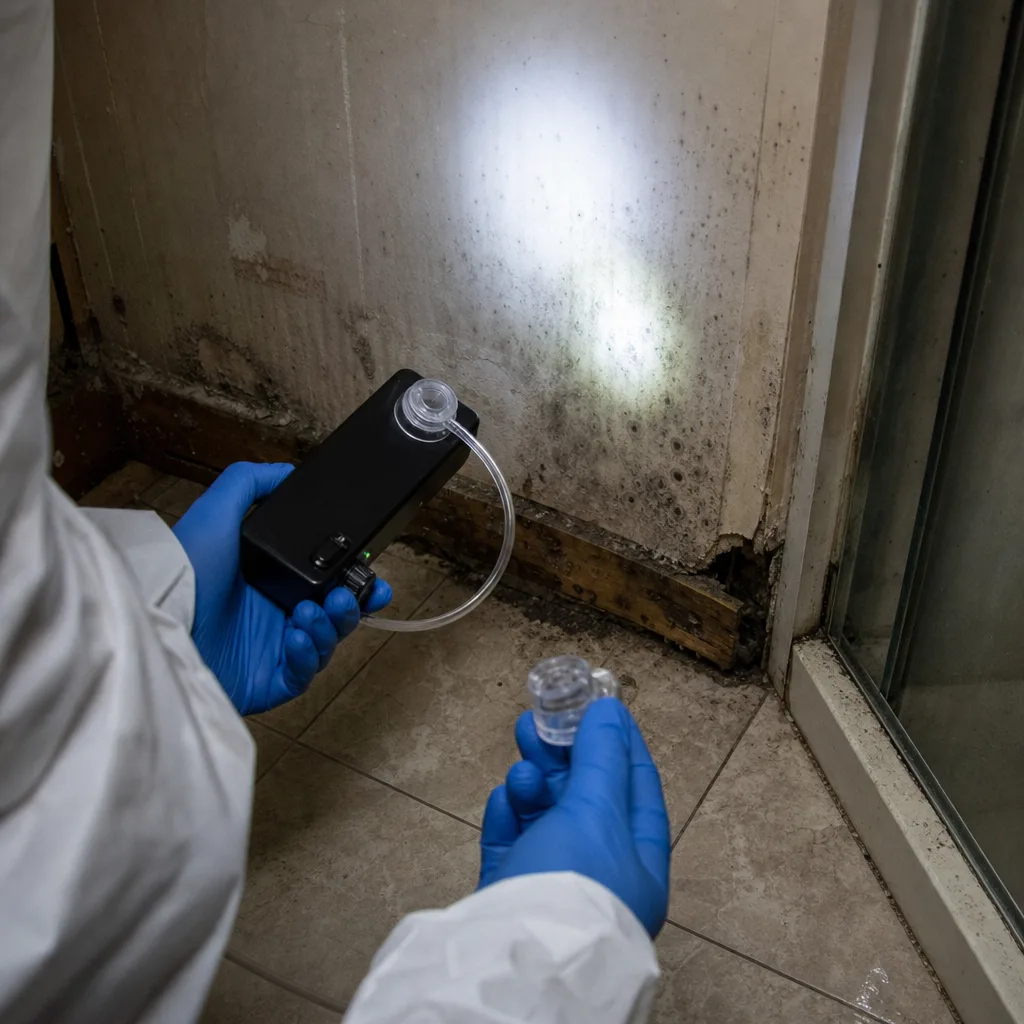
HEPA filtration and antimicrobial treatments address what the water left behind - bacteria, sediment, and the beginnings of mold growth. In Category 3 situations, we contain the area and treat it as contaminated before drying even begins.
Specialty Treatment
This is where Tuckahoe work often demands more than drying - it calls for reconstruction and cleanup. Old plaster may need salvage or targeted removal. Rubble-stone foundations may need sump pump retrofits and drain channels so the same basement doesn’t flood again the next spring. Wood framing may need split dry-out after river water exposure.
Repairs & Restoration
The same crew rebuilds what needs rebuilding. Drywall, plaster, flooring, trim, paint. We restore the space to its pre-loss condition, and if upgrades make sense while walls are open - improved drainage, better insulation, modern sump systems - we’ll show you the options before we close up.
Need Emergency Storm & Disaster Restoration in Tuckahoe Now?
Crews minutes away, answering live 24 hours a day. The sooner we start, the less it costs.
Working With Your Insurance Company
Insurance claims for storm damage in Tuckahoe depend on documentation. The carrier needs to see what we saw, when we saw it, and what we did about it. We document from the first hour: photos of the standing water, the roof damage, the buckled flooring, moisture readings, thermal images. Then we prepare an industry-standard estimate with line-item detail that your adjuster can actually process.
We communicate with the adjuster directly. If they want to inspect, we schedule it. If they have questions about our drying logs or scope of work, we answer them. Our founding principle, set by Curt Bowman in 2010, was to stop making homeowners play middleman between a restoration company and an insurance carrier. That principle hasn’t changed.
What We Provide Your Insurer
- Thorough documentation of the loss
- Photos of all damage, room by room
- Moisture readings and drying logs
- A detailed, line-item scope of work
- Direct coordination with your carrier
Built for Tuckahoe’s Loss Calendar
Tuckahoe doesn’t have one storm season. It has a loss calendar, and we plan around it. January and February bring deep freezes that burst galvanized supply lines in unheated crawlspaces and exterior walls, especially in the two and three-family wood-frame houses that dominate the village’s housing stock. February and March bring ice dams on older roofs where heavy snow loads meet poor attic insulation, and the melt backs up under shingles and into eaves.
April and May are when the Bronx River rises, snowmelt runs downhill toward the valley floor, and basements near the river corridor take on water week after week. Summer brings convective storms: short, violent downpours that overwhelm the drainage system and send sheet water directly toward the oldest foundations in the village. And then comes hurricane season, where Tuckahoe’s tight lots mean wind damage to one roof often means debris on a neighbor’s property. Every season has its pattern. We know them because we answer the phone for all of them.
Storm & Disaster Restoration Across Tuckahoe’s Neighborhoods
The homes along the Bronx River corridor near Main Street take the worst of it every single year. These blocks are the low point in the village, and when the river backs up through storm drains, basements here flood even on days when the rain wasn’t all that heavy. Our crews know which streets this happens to, because we’ve pumped the same basements in consecutive Aprils. We know the homes near the Crestwood border, where slate roofs on steep pitches mean tarping requires more than a ladder and a roll of poly.
Up near the Bronxville line, we see a different pattern. The homes there are often the same vintage, but the grades are a bit better, so damage skews more toward wind, roof, and ice dams than chronic basement flooding. Through the center of Tuckahoe, the tight two-family and three-family homes on Columbus Avenue, Marbledale Road, and Lake Avenue present their own challenge: one storm can affect three units at once, and the water travels from the top floor down through shared walls. We’re set up for that. We work the whole building, not just one apartment’s worth of damage.
Specialized Storm & Disaster Restoration Services We Offer in Tuckahoe
Flood Damage Restoration
This is the work Tuckahoe calls for most, and it isn’t the dramatic, once-a-decade flood people picture. It’s the repeated basement flooding that hits the same downhill blocks every spring, fed by snowmelt and river backup. We extract, contain, dry, and restore - but we also retrofit. A sump pump sized for a modern home cannot keep up with a Bronx River backup in a 1920s basement. We install systems that can, and we build in the drainage channels that keep the water from pooling next to old foundation walls.
Storm Damage Cleanup
Wind, rain, and falling limbs leave debris on roofs, in yards, and against foundation walls. We clear it, document it for insurance, and assess what the storm compromised. In Tuckahoe’s tight lots, a downed tree often means damage to two properties, and we help coordinate with the neighbors’ carriers so the cleanup doesn’t spiral into a dispute.
Roof Tarping
When wind tears a section of shingles off a Tuckahoe roof, the water enters immediately. We tarp the same day, often within hours of the call. Older roofs on steep pitches - the slate and cedar shake rooflines common on the village’s pre-war homes - require care and proper anchoring, not just a quick cover. We do it safely and we do it right.
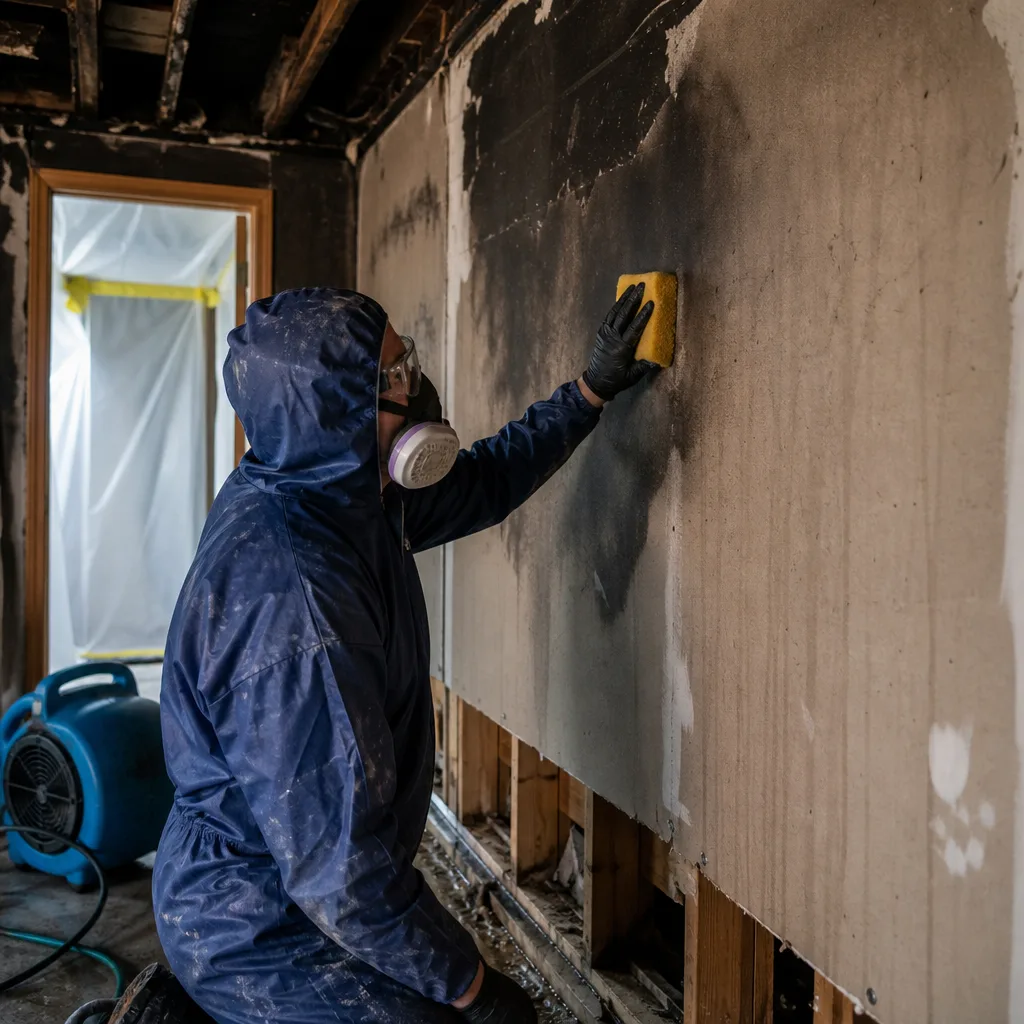
Emergency Board-Up
Broken windows and wind-damaged doors leave a property open to weather, theft, and animals. We board and secure openings the same day. It’s a stopgap that matters, a simple step that keeps a bad situation from getting worse before restoration work begins.
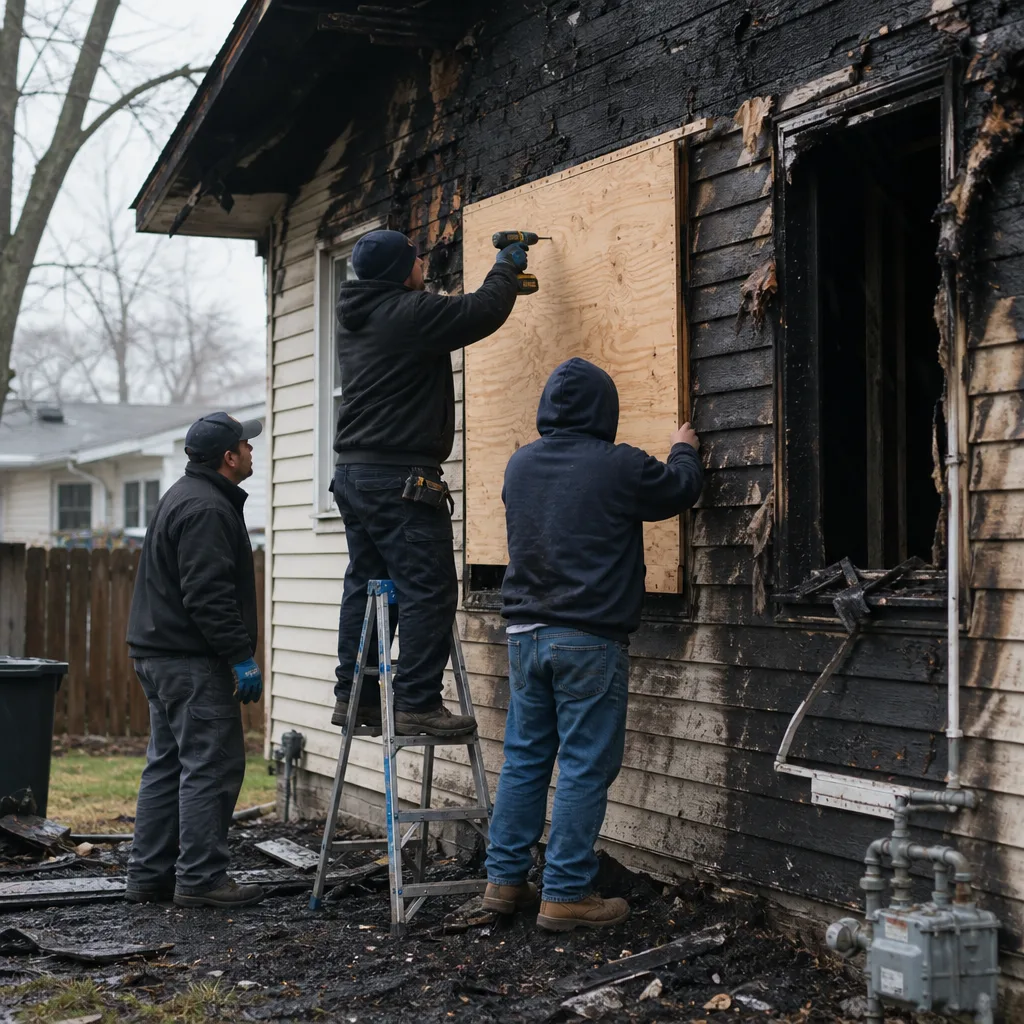
Debris Removal
Limbs, shingles, and wind-blown trash create hazards and block access. We clear it quickly and document what was removed for the insurance file.
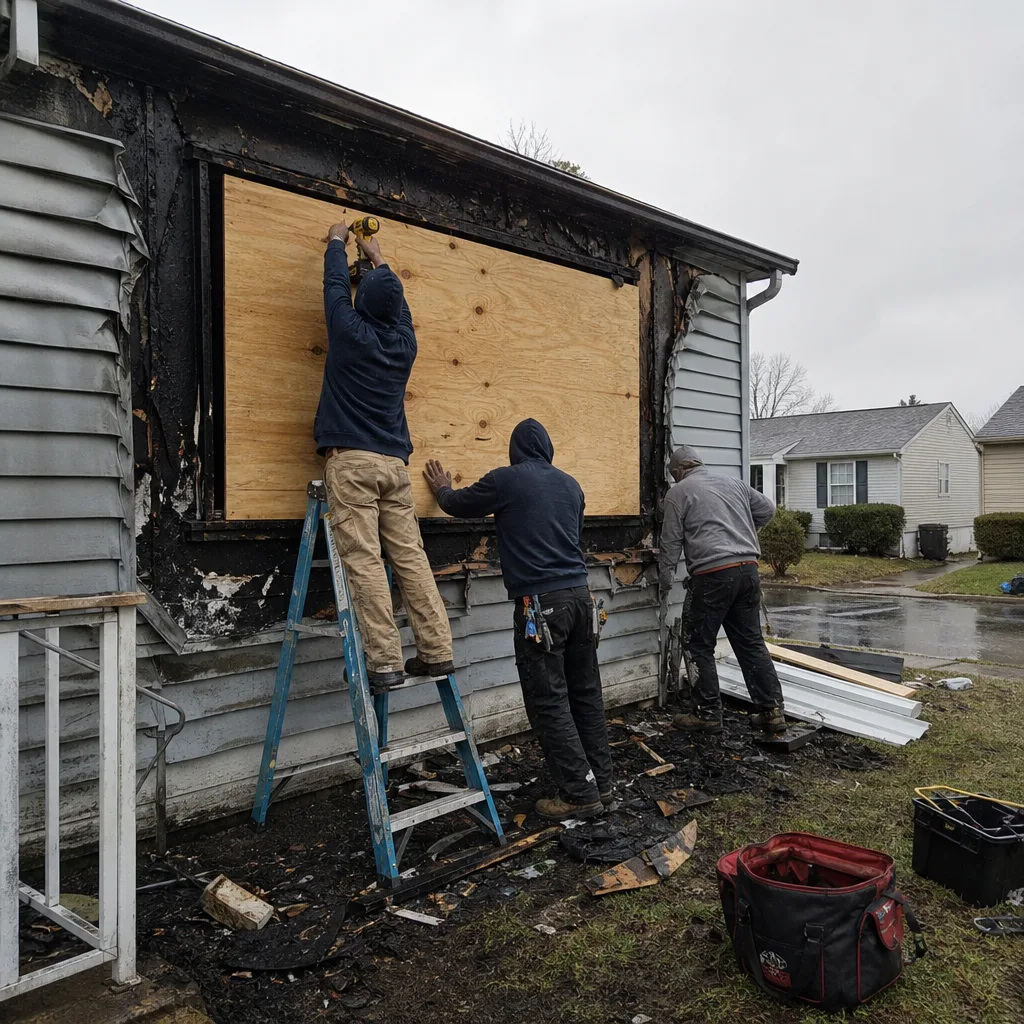
What happens when you call
- 1
A real person answersNo phone trees - you reach a local pro.
- 2
You get an upfront price rangeHonest numbers before anyone is dispatched.
- 3
A background-checked tech heads outLicensed & insured, dispatched right away.
- 4
You approve before work beginsNothing starts until you say go.
Storm & Disaster Restoration Costs in Tuckahoe, NY
Every storm is different, but Tuckahoe pricing follows predictable patterns. A typical roof tarping job on a Tuckahoe home runs $350 to $800 depending on pitch and accessibility - slate and cedar roofs push that higher. Emergency board-up and debris removal generally lands between $300 and $900. Basement water extraction starts around $700 for a single room and climbs to $2,500 or more when a full pre-war basement is involved because the drying time is longer and the Category 3 contamination from river backup changes the entire scope.
Full flood restoration, including drying, sanitization, and rebuilding, runs anywhere from $4,000 for a contained laundry room to $35,000+ for saturated plaster walls, flooring, and structural drying across a multi-unit building. What moves the price in Tuckahoe specifically is age and hidden moisture. An old plaster wall that held river water needs more work than a sheet of drywall ever will. Your complete insulation answer starts with a free visual inspection. Call (640) 356-1140 and we’ll get you a real number, in writing, before work starts. Our Tuckahoe team knows these homes and knows what they cost to fix.
We Also Serve Cities Near Tuckahoe
Our crews work throughout the lower Westchester corridor. If you’re in Bronxville or Dobbs Ferry, the same live dispatch, same certified technicians, and same written guarantee apply. Call and ask.
Tuckahoe Storm & Disaster Restoration Questions, Answered
Why do so many Tuckahoe basements flood every spring even without heavy rain?
Because those basements sit below the water table that rises with spring snowmelt and the Bronx River’s seasonal height. Pre-war foundations on rubble-stone and early poured concrete were built before damp-proofing, so water simply seeps through when the ground pressure rises. It doesn’t take a big storm. It takes a warm day after snow. Call (640) 356-1140 and we’ll map where your water is really coming from.
Can old plaster walls be saved after a Tuckahoe flood, or do they always need replacement?
Plaster can often be saved if we reach it within the first 24 to 48 hours. Fog-based drying, controlled dehumidification, and moisture mapping let us dry the wall from inside its cavities. But if the plaster has been soaked with Category 3 river water, or if the lath behind it is already wicking moisture upward, removal is usually the only honest answer. We’ll show you the moisture readings and explain the choice.
Are the sump pumps in old Tuckahoe basements sized for Bronx River backups?
Almost never. Most sump pumps in Tuckahoe’s pre-war basements were installed to handle ordinary groundwater seepage, and they’re undersized for the volume of water a river backup pushes through the drainage system. That’s exactly why we include sump pump retrofitting and drain channel installation in our restoration scopes. If it flooded once, it will flood again unless the system changes.
What does a Storm & Disaster Restoration scope of work look like for a 1920s Tuckahoe brick home?
It typically includes emergency extraction, containment if river water was involved, structural drying with daily moisture logs, plaster assessment and restoration or removal, flooring evaluation and replacement, our Sanitization Services in Tuckahoe, and a drainage retrofit plan so the next storm doesn’t repeat the same damage. Each item is line-priced and reviewed with you before we start.
How do you handle roof tarping on old Tuckahoe homes with steep slate or cedar roofs?
Slowly and securely. Those roofs are steep, often slippery when wet, and tarping them properly means anchoring to the structure itself, not just tossing a tarp over the peak. We send crews who know slate and cedar and understand how to protect them from further damage during the tarping process itself.
How fast can you actually get to a Tuckahoe home during a big storm?
We commit to a 45-minute response time for Tuckahoe calls when conditions allow. In a nor’easter or major thunderstorm, that can stretch because roads flood and trees come down, but our crews stage in the area when big storms are forecast. The live dispatcher on the phone can tell you exactly when a crew will arrive.
Will my insurance cover flood damage from a Bronx River backup in Tuckahoe?
Storm flood damage is generally covered under most homeowners policies, but river backup that enters through a sewer or drain line may fall under sewer backup coverage, which is sometimes a separate rider. We document what happened and where the water came from, and we coordinate directly with your carrier. The documentation makes the coverage determination clear.
What should I do in the first 30 minutes after storm water gets into my Tuckahoe basement?
If it’s safe to reach your electrical panel, cut power to the basement. Then call (640) 356-1140. Don’t enter standing water especially if it could be river backup, and don’t run a wet vac on contaminated water. The faster extraction starts, the less damage the water does to plaster, framing, and the air you’re breathing. We’ll walk you through the first steps on the phone.
Serving Tuckahoe, NY - Our Local Coverage Area
We’re based in the Tuckahoe area and know this community well. Use the map below to see our service coverage - if you’re nearby, we can almost certainly help.
One Job, Done Right, Backed in Writing
Storm damage in Tuckahoe is rarely a one-time event. The same basements flood year after year. The same rooflines lose shingles. The same foundations weep. That’s why the people who call us tend to call again, and why we built a company around doing the job once and doing it right. Curt Bowman founded Floodline Restoration Co. in 2010 on a simple idea: a restoration company that answers its own phone, does its own work, bills the carrier directly, and stands behind the result in writing. That’s what we do, every day, in Tuckahoe and throughout the lower Bronx River valley.
Our Storm & Disaster Restoration crew is ready now. If the water is rising or the roof is open, call (640) 356-1140. A live person answers. A certified crew comes. And the job gets done right.
Written by Curt Bowman, Owner at Floodline Restoration Co., serving Tuckahoe and Westchester County with storm and disaster restoration since 2010.