
Quick Summary
When hazardous Category 3 blackwater impacts a property, prompt professional sewage backup cleanup in Getty Square is vital to prevent structural decay and neutralize severe biohazard risks. Floodline Restoration Co. addresses emergency backups through rapid containment, bulk wastewater extraction, hospital-grade sanitization, and precise loss documentation to streamline insurance claims. Readers will understand how to manage contaminated structural materials safely and can contact the Floodline Restoration Co. 24/7 emergency dispatch line to schedule immediate sewage extraction alongside a free visual inspection.
Sewage Backup Cleanup in Getty Square: Safety Steps and Restoration Considerations
When municipal sewer lines back up into a property in Getty Square, contaminated water presents serious safety and sanitation challenges. According to the Institute of Inspection, Cleaning and Restoration Certification (IICRC) Standard S500, wastewater from sewage backups is classified as Category 3 water, which may contain bacteria, viruses, parasites, and other harmful agents. Site conditions in Getty Square vary across individual properties and require an on-site inspection to determine the source, pathway, and extent of contamination.[2]
Remediating a sewage backup typically involves containment, wastewater extraction, material evaluation, and sanitization. Professional restoration companies, including Floodline Restoration Co., offer property recovery services for residential and commercial spaces affected by sewage incidents.
Note on municipal data and response times: According to the City of Yonkers Municipal Separate Storm Sewer System (MS4) Annual Report, municipal data tracks citywide illicit discharges or illegal connections (documenting 9 confirmed instances citywide, with 5 eliminated during that reporting period), but these figures concern storm sewer system compliance and not sewage-backup cleanup incidents within Getty Square. Furthermore, no neutral, Getty Square-specific emergency response-time figure has been verified. Every backup requires an on-site professional assessment.[1]
What to Do Immediately During a Sewage Backup
If raw sewage enters a property, occupants should evacuate affected lower areas. Turn off electrical breakers serving the area only if the main panel can be reached safely without contacting standing water. Individuals should avoid direct contact with standing wastewater, splashes, aerosols, and potentially hazardous gases, and contact professional restoration services, such as Floodline Restoration Co., for assessment and remediation.
According to public health guidance from the Centers for Disease Control and Prevention (CDC), raw sewage may contain bacteria, viruses, and parasites. The CDC advises that individuals avoid direct contact with contaminated wastewater, avoid splashes and airborne aerosols generated by disturbed wastewater, and exercise caution regarding potentially hazardous sewer gases.[4]
Potential Response and Containment Practices for Category 3 Water
According to restoration industry guidelines such as the IICRC S500, addressing Category 3 wastewater involves controlling the spread of biological contaminants to protect indoor environments.
Containment and Biohazard Isolation
To reduce cross-contamination risks, restoration technicians may implement physical containment barriers and operate HEPA-filtered air filtration devices to establish negative air pressure. These practices are designed to help prevent odors, bio-aerosols, and airborne particles from migrating into unaffected areas during extraction and cleanup.
Pumping, Moisture Detection, and Disinfection
Possible procedures for managing black water contamination, as outlined in IICRC S500 protocols, include:
- Bulk Extraction: Submersible or truck-mounted pumps may be used to remove standing wastewater and solid waste from structural slabs.
- Thermal and Moisture Mapping: Technicians often employ infrared cameras and moisture meters to evaluate moisture intrusion behind walls and beneath flooring.
- Antimicrobial Application: EPA-registered disinfectants and sanitizing agents may be applied to affected non-porous surfaces to neutralize microbial contamination before drying operations proceed.
Considerations for Foundation Slabs and Building Materials
Need sewage backup cleanup in Getty Square?
We’re available now - call for a fast, free estimate.
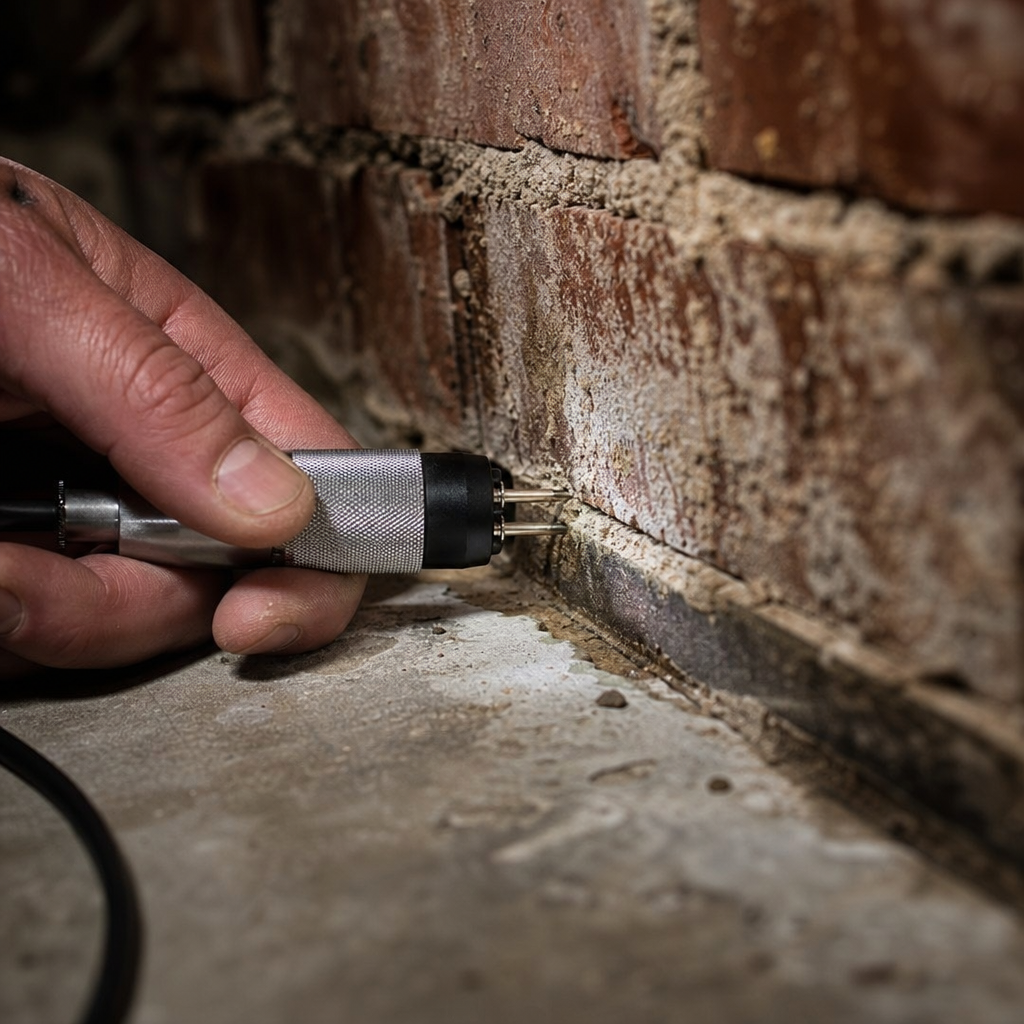
Site conditions and structural assemblies vary by property, and an on-site evaluation is necessary to assess how wastewater impacts concrete slabs, masonry foundations, and adjoining wall assemblies.
Moisture Migration Through Porous Structural Elements
Porous structural materials, such as concrete slabs and masonry, can absorb moisture and dissolved contaminants through micro-fissures and expansion joints. In attached structures, moisture may transfer into adjacent assemblies. Restoration professionals, such as Floodline Restoration Co., may utilize targeted extraction, antimicrobial washes, and commercial dehumidification to address trapped moisture within dense materials based on inspection findings.
Material Assessment: Porous, Semi-Porous, and Non-Porous Items
Under IICRC S500 standards, restorable versus non-salvageable building materials and contents are evaluated based on porosity and the level of Category 3 contamination:
| Material Type | Affected Items | General Remediation Considerations (IICRC S500) |
|---|---|---|
| Porous Materials | Drywall, insulation, carpet, padding, acoustic ceiling tiles | Porous materials that absorb Category 3 wastewater generally cannot be completely sanitized and typically require controlled removal and disposal. |
| Semi-Porous Materials | Plywood subflooring, structural framing, concrete, masonry | May be evaluated for salvageability if structurally sound, often requiring cleaning, antimicrobial treatment, and extended structural drying. |
| Non-Porous Materials | Tile, metal, porcelain, glazed concrete block | Generally salvageable after thorough cleaning and disinfection using EPA-registered products. |
Cleanup Costs and Insurance Considerations
The total cost for sewage backup remediation depends on factors such as the volume of wastewater, the square footage affected, and the extent of demolition or drying required. An on-site assessment by a qualified professional from Floodline Restoration Co. is necessary to determine an accurate scope and estimate.
Factors That Influence Cleanup Pricing
Restoration estimators evaluate several operational variables when determining project scope:
| Cost Driver | Technical Scope | Impact on Recovery Work |
|---|---|---|
| Contamination Depth and Spread | Volume of wastewater and square footage affected | Influences equipment capacity, labor requirements, and waste disposal needs. |
| Demolition Scope | Extent of saturated drywall, trim, and flooring removed | Determines containment setup, debris removal, and preparation for repairs. |
| Structural Drying Requirements | Moisture levels in framing, masonry, and subfloors | Dictates dehumidification capacity, air movement needs, and the duration of drying cycles. |
Understanding Property Insurance Coverage
According to the Insurance Information Institute (III), insurance coverage for sewage backup depends on the specific policy terms and the underlying cause of the loss. Standard homeowners and commercial property policies frequently exclude sewer or drain backups, as well as flood damage, unless covered under specific endorsements or standalone policies. Sewer or drain backup coverage often requires a separate endorsement (such as a water backup rider). Policyholders should check their declarations page and contact their insurance carrier or agent to confirm applicable coverages, exclusions, and deductibles.
Professional restoration contractors, such as Floodline Restoration Co., can document the loss with photographs, moisture readings, and itemized scopes of work to assist policyholders when presenting claims to insurance adjusters.[3]
Frequently Asked Questions
When should cleanup begin after a sewage backup?
Prompt evaluation and cleanup are advised to mitigate structural deterioration and limit health hazards from standing Category 3 wastewater. According to IICRC S500 guidelines, timely extraction and drying help minimize secondary moisture damage to framing and building materials. Note that no neutral, Getty Square-specific contractor response-time figure has been verified.
Can personal items contaminated with sewage be saved?
According to IICRC S500 standards, non-porous items such as metal, glass, and hard plastics can generally be cleaned and disinfected. Porous personal items that have absorbed raw sewage-such as mattresses, upholstered furniture, and cardboard-are difficult to sanitize thoroughly and often require disposal for safety reasons.
Does property insurance cover sewage backup cleanup?
According to the Insurance Information Institute (III), coverage depends on the specific policy and the cause of the backup. Standard policies often exclude sewer, drain, and flood backups without an optional endorsement, such as a water backup rider. Policyholders should review their policy declarations page and contact their insurance provider to confirm coverage terms and deductibles.
Is it safe to stay in the building while sewage is being cleaned up?
According to public health guidance from the CDC, occupants should avoid contact with contaminated areas, wastewater splashes, aerosols, and sewer gases. In cases of extensive contamination or when HVAC systems are affected, temporary relocation away from impacted zones may be recommended until containment, cleaning, and sanitization are complete.
Need sewage backup cleanup in Getty Square?
We’re available now - call for a fast, free estimate.
Sources
- NYSDEC eBusiness Portal System – MS4 Annual Report/Interim Progress Certification-2026. Revision 1 – yonkersny.gov (2026)
- Stormwater Phase II Program | Yonkers, NY – yonkersny.gov (2025)
- Balch Springs Is Flooding: The Hidden Clock Destroying … – genconbd.alabama.gov
- Flooding and Sewage Back-ups: Home Care Guide – mass.gov
Frequently Asked Questions
How does Floodline Restoration Co. assist with insurance claims for sewage backup cleanup in Getty Square?
Floodline Restoration Co. works directly with property adjusters by providing comprehensive loss documentation, including moisture maps, photographic evidence, and itemized IICRC-compliant scopes of work. This streamlined coordination helps property owners navigate water backup endorsement riders and accelerates the claims process from initial extraction to structural repair.
What sanitization methods are used to eliminate biohazards after a blackwater backup?
Remediation involves applying hospital-grade, EPA-registered disinfectants to neutralize bacteria, viruses, and parasites found in Category 3 wastewater. Floodline Restoration Co. pairs chemical sanitization with HEPA-filtered air filtration and negative pressure systems to ensure hazardous bio-aerosols and odors do not cross-contaminate unaffected living areas.
How can I schedule immediate emergency sewage extraction in Getty Square?
Property owners can contact the Floodline Restoration Co. 24/7 emergency dispatch line at +16403561140 to request rapid-response extraction and a free on-site visual inspection. Immediate containment and pumping help prevent blackwater from migrating deeper into structural slabs, framing, and adjacent units.
About the author
 |
Marcus Velez Marcus Velez brings over a decade of hands-on experience in water mitigation and mold remediation to the Floodline Restoration team. Holding an IICRC certification in Applied Microbial Remediation, he specializes in identifying and resolving hazardous mold conditions safely and effectively. Before transitioning to restoration writing, Marcus spent seven years managing large-scale residential recovery projects across Northern New Jersey. |
Water damage, flood, or mold emergency?
We’re available now - call for a fast, free estimate.
Call Now - Free Estimate