
Water Damage Restoration Pricing Breakdown: What Lodi Homeowners Pay in 2026
Water damage restoration in Lodi typically runs $4,000 to $11,000 for a finished basement flood, with the final number driven less by square footage than by water category, how fast drying begins, and whether the rebuild stays with the same crew. Most Lodi homeowners pay between $2,800 and $7,500 for extraction and structural drying alone, before any rebuild work. The single biggest pricing variable is time: the same basement flooded with clean water can cost $3,000 to dry or $12,000 to restore, depending on whether a certified crew with professional-grade equipment arrives in the first few hours or a truck-mounted fan shows up the next morning.
If you’re staring at a wet basement right now and would rather have a real number than keep reading, call (640) 356-1140. A live dispatcher answers, and we’ll walk you through what you’re likely looking at before anyone steps foot in your house.
How Much Does Water Damage Restoration Cost in Lodi, NJ?
The average water damage invoice in a northern New Jersey finished basement runs $4,000 to $11,000. That’s not a square-footage calculation. It’s a function of five line items the insurance carrier will scrutinize and the homeowner should too: extraction, structural drying, demolition, antimicrobial treatment, and rebuild. In Lodi specifically, the age of the housing stock adds a sixth factor: homes built between 1940 and 1970 often have plaster-over-lath walls, oak strip flooring over tongue-and-groove subfloor, and finished basements added at least twenty years ago. Those materials hold water differently than modern drywall and engineered flooring, and they cost more to dry or replace.
Here’s what we actually see on invoices from Water Damage Restoration in Lodi jobs in 2026:
- Extraction and water removal: $850-$1,900 for a standard finished basement, using truck-mounted or portable extraction units. Expect higher numbers if standing water has sat for more than 24 hours and water has wicked into drywall and insulation.
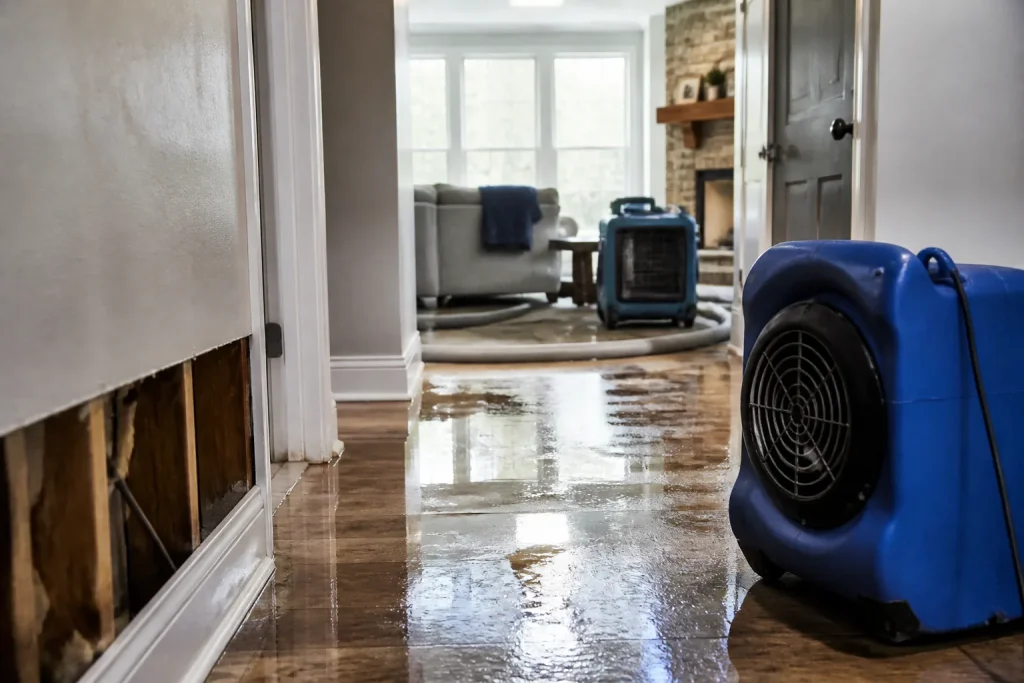
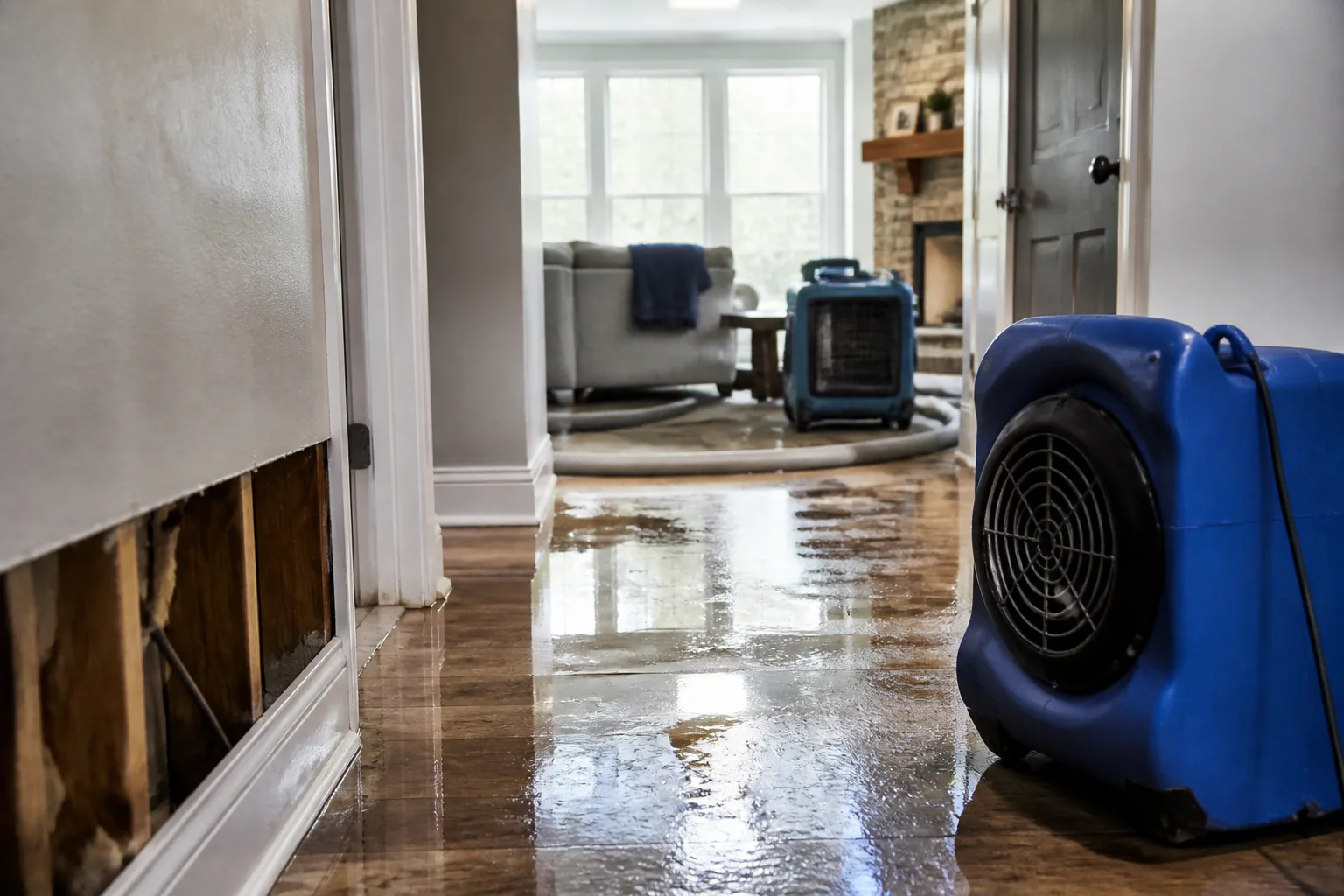
- Structural drying (per day of equipment): $175-$350 per day for commercial air movers, dehumidifiers, and Injectidry mat systems. Most Lodi basements need 3 to 6 days of active drying, so budget $525-$2,100 just for this line item. Smaller homes with unfinished basements trend toward the low end; finished spaces with carpet pad, drywall, and multiple rooms trend high.
- Demolition and disposal: $1,200-$3,800. This includes removing wet drywall, carpet and pad, baseboards, and insulation. Older Lodi basements with multiple layers of flooring or paneling over drywall add disposal weight and labor.
- Antimicrobial treatment and sanitization: $350-$900. Applied after extraction and during drying to prevent mold before it starts. Skipping this line item on a Category 2 or 3 loss will cost far more down the road.
- Rebuild and refinishing: $2,500-$8,000 depending on what was torn out. Drywall replacement, trim, paint, flooring, and ceiling work. This is where the invoice separates a contractor who hands the job to a subcontractor from a full-cycle crew that does its own rebuild.
These are Lodi-specific ranges, not national averages. They reflect the cost of doing business in Bergen County: disposal fees, permit requirements in flood-zone-adjacent streets, and the labor rate for certified technicians who carry IICRC and RIA credentials. The difference between a $4,000 job and an $11,000 job is rarely the size of the flood. It’s whether the first responder got the water category right, whether drying started the same day, and whether the rebuild estimate includes everything or just the visible damage.
What Actually Drives the Price: Water Category, Not Just Water Volume
All water damage gets called “water damage” on a work order, but the insurance industry and restoration companies price three categories very differently. Most Lodi homeowners hear “Category 2” and assume it’s a minor step up from a leak. It isn’t.
- Category 1: Clean water. From a supply line, a failed water heater, or an overflowing sink with no contaminants. This is the cheapest restoration scenario. Extraction and drying without major demolition, usually $2,800-$5,500 in a finished Lodi basement. Antimicrobial treatment is still standard, but the contamination risk is low.
- Category 2: Gray water. Water that has been used: dishwasher discharge, washing machine overflow, sump pump failure with minor contamination, or clean water that sat for 24-48 hours. This requires more aggressive drying, more demo, and full antimicrobial treatment. Budget $4,500-$8,000. The cost jumps because porous materials that absorbed gray water (carpet, pad, some drywall) should be removed, not dried in place.
- Category 3: Sewage and flood water. Sewer backups, toilet overflows with waste, river or storm surge water. This is a biohazard job dressed up as water damage. Expect $6,000-$15,000 or more in Lodi depending on how far the water traveled. Everything the water touched gets removed and bagged, and the space is treated before any rebuild begins. We’ve pulled category 3 out of homes near Hasbrouck Heights where the water was only ankle deep, but it had carried sewage through two finished rooms and under a stairwell. The demo cost more than the drying.
Here’s the part that’s easy to miss: a Category 1 flood left for 48 hours becomes a Category 2 situation by definition, because standing clean water grows bacteria. A homeowner who files a claim and waits for a callback while the water sits is effectively raising their own invoice. That’s why speed is a line item in itself, not a marketing slogan.
Insurance carriers in New Jersey do cover water damage restoration, but the water category determines what they’ll approve. Category 1 from a sudden burst pipe is routinely covered. Category 3 from a sewer backup is often covered only with a specific endorsement. Category 2 from a slow leak that ran for weeks is the most commonly disputed claim, because carriers argue it was maintenance-related rather than sudden. This is where a contractor who bills the carrier directly earns its keep. When we handle the billing, we see the line-item rejections a homeowner playing messenger never would: a carrier refusing three days of drying equipment when the moisture map shows the dry standard wasn’t hit until day four, or cutting demolition when the water category says otherwise. We push back with documentation.
The Hidden Cost of a Finished Basement in Lodi
A finished basement is not a bigger unfinished basement. It’s different work entirely, and Lodi has more of them than most Bergen County towns because finished basements were the affordable housing strategy of the 1960s and 1970s. The houses went up, the basements got paneled and carpeted, and fifty years later every one of them holds water differently.
Water in a finished basement means demolition decisions start the moment extraction does. Baseboards cover drywall that sits on the slab and wicks water upward. Carpet pad acts as a sponge and holds water against the slab for days, even after the top surface feels dry. Drop ceilings hide plumbing and ductwork, and water can travel along the framing above the drop ceiling where no one sees it for a week. All of that has to come out, be logged, and be replaced. That’s why a finished basement flood in Lodi runs 2 to 3 times more than the same square footage of water in an unfinished space.
An unfinished basement with a concrete floor and exposed joists is almost always a drying job. Extract, set equipment, take moisture readings for a few days, charge $1,800-$3,200. The same amount of water in a finished basement is a demolition and rebuild job. Homeowners in Lodi who have a finished basement should also understand that “finished” doesn’t always mean “permitted.” We’ve seen basements finished in the 1980s with framing that never got a certificate of occupancy. When demolition and rebuild start, bringing that space to current code sometimes adds electrical or egress work the original finish never had. That’s a real cost on a rebuild invoice, and it’s one of the line items honest contractors disclose up front and others bury until the estimate has already been signed.
How Insurance Billing Actually Works (and Why the Messenger Always Loses)
Most Lodi homeowners with a mortgage carry homeowners insurance, and most of those policies in New Jersey cover sudden and accidental water damage. What they don’t cover is the gap between what a restoration company quotes and what the carrier approves. That gap is where homeowners end up writing personal checks, and it’s usually avoidable.
Carriers dispute three things most often, in our experience: the number of drying days, the demolition scope, and the water category. On each of those, a carrier is making a decision based on a phone call or an emailed estimate. What they need to approve the full amount is documentation: daily moisture readings from professional-grade equipment, photo documentation of visible water migration, and a moisture map that shows where water traveled even where it wasn’t visible. A contractor that bills the carrier directly submits all of that as part of the claim. A homeowner playing messenger forwards an invoice and hopes.
This is not a small difference. We’ve taken over claims from Lodi homeowners who were stuck between a restoration crew that had finished drying and a carrier that wouldn’t pay for half the demo because the documentation was a three-line invoice. The work was done. The carrier said prove it. The homeowner couldn’t. On a $7,000 job, that gap can be $3,500 out of pocket.
Direct billing also catches the line-item rejection that homeowners miss. Carriers in New Jersey sometimes refuse to pay for “emergency service call” fees, or they’ll cap drying equipment at three days without reviewing the moisture log. A restoration company that submits directly can push back on those the day they come in, with the documentation in hand. It’s the difference between an adjuster approving a claim in a week and a homeowner fighting one for a month.
For more on what a full restoration involves, see our Floodline Restoration Co. home page or the detailed breakdown on Fire & Smoke Damage Restoration in Lodi if the water came with fire damage. Different disaster, same billing discipline.
Red Flags: What Signals a Crew That Will Hand Off the Rebuild and Disappear
Most restoration companies in Lodi don’t do their own rebuild. They dry, they demo, they cut a check to a subcontractor, and they vanish. The homeowner is left with a different crew, no one to call about the gap between the dry-in and the finish work, and a warranty that doesn’t exist. Here’s what to look for before you sign anything:
- A flat-rate bid with no itemization. “We charge $4,500 for any basement flood.” That’s not a quote; it’s a number. Real restoration pricing is line-item specific because the work is line-item specific. A flat rate means someone is guessing, and when the guess is low, the corners get cut somewhere you can’t see.
- Vague “drying package” language. If the estimate says “drying package” without listing the number of air movers, dehumidifiers, days of monitoring, and a moisture log commitment, you’re paying for a concept, not a service. Ask for the equipment list. Any legitimate company has one.
- No mention of antimicrobial treatment on a Category 2 or 3 loss. This is a liability line item, not an upsell. If a crew quotes sewage cleanup without sanitization, the lowest bid just got more expensive because someone will be back in six months for mold.
- No written guarantee. If the company won’t put its work in writing, the warranty is a conversation. That’s not a warranty.
A real invoice in Lodi should read like what it is: a scope of work with dollar figures attached. Extraction, drying equipment per day, demolition, sanitization, rebuild, and the guarantee stated plainly. If it doesn’t, call someone else.
One more thing: the lowest bid on water damage is often the highest bill by the time the job is done. A licensed, insured company that pays for professional-grade Dri-Eaz equipment and certified technicians has costs a “two guys with a wet vac” operation doesn’t. But the two guys with a wet vac are the ones who miss the water behind the baseboard, and that water becomes mold, and the mold becomes a Mold Remediation in Lodi job that costs twice the original flood. The square deal isn’t the cheapest number; it’s the number that’s honest from the first day.
When to Call a Pro (and When to Wait for the Floor to Dry)
If the water came from a supply line, a water heater, or an appliance, and it’s more than a few towels’ worth, call a restoration company. Even a Category 1 flood can saturate drywall, wick into flooring, and settle into the subfloor where no towel ever reaches. We pulled one out of a finished garage over by the Lodi High School last month where a water heater let go at 2 a.m. The homeowner’s son had been mopping for an hour before we got there. The visible water was gone; the water under the laminate and behind the drywall was not. The moisture map showed it. He’d have been replacing that floor in a year either way.
Here’s the short version: if the water is more than a few gallons, came from anything except a clean supply line, or has been sitting for more than a few hours, call (640) 356-1140. A live person answers, we give you a straight read on what you’re dealing with, and we don’t charge for the phone call or the estimate.
If you need related help after a fire or a storm, our full-cycle crew handles those too. And if you have mold from a past water event that was never properly dried, we start with a written scope, not a sales pitch.
The Bottom Line
Water damage restoration in Lodi costs what it costs because of the water category, the speed of the response, the materials in your basement, and whether the company that starts the job is the company that finishes it. The national average is a useless number. The Lodi number is $4,000 to $11,000 for a finished basement, and the spread is determined by decisions made in the first six hours.
If you’re in Lodi and standing in water, call (640) 356-1140. If you’re researching so you’re ready when it happens, save this page and call us when you need us. Floodline Restoration Co. offers free estimates, answers the phone with a live dispatcher at any hour, and puts the 90-Day Done Right Promise in writing before the job starts. No surprises on the bill, no mid-job handoff, and nobody disappears when the rebuild starts.
Written by Curt Bowman, Owner at Floodline Restoration Co., serving Lodi since 2010.
Frequently Asked Questions
Most Lodi homeowners pay $4,000 to $11,000 for a finished basement flood, with extraction and structural drying accounting for $2,800 to $7,500 of that total. The final number depends on the water category, how quickly drying starts, and the extent of the rebuild. Call (640) 356-1140 for a free estimate based on your specific situation.
Insurance policies in New Jersey typically cover sudden and accidental water damage, including burst pipes and appliance failures. Sewage backups often require a specific endorsement, and slow leaks that ran for weeks are frequently disputed as maintenance issues. A restoration company that bills the carrier directly can submit the documentation carriers need to approve line items a homeowner forwarding an invoice would miss.
Floodline Restoration Co. operates with live dispatch 24/7, so a certified crew can typically reach a Lodi home within hours of the first call, extraction running the same visit. Speed matters because clean water sitting for 48 hours becomes contaminated, and contaminated water costs more to remediate. Call (640) 356-1140 any time; a live person answers.
That depends on the water category and how far it traveled. Water that soaked into drywall, flooring, or baseboards requires professional drying with moisture mapping, not just surface cleaning. Water that sat for more than a day, or gray or sewage water, requires demolition and antimicrobial treatment. A free assessment in Lodi will tell you which scenario you’re in, with a written scope before any work starts.
Need Damage Restoration Help?
Call Floodline Restoration Co. - licensed & insured, here with fast after-hours help in Lodi.
(640) 356-1140